
I have a love-hate relationship with the Persona games that’s completely of my own making. I went from playing in blissful ignorance to strategic burnout after I started focusing on completionism and achievements. Can sometimes knowing too much ruin a good thing?
Blindly Playing Persona 5
Persona 5 was my first dive into the Persona series, and I went in knowing absolutely nothing. At the time, this was the original release, there was no Royal edition, and no DLC. It was just the base game and my complete ignorance of its intricate social link system and overall game mechanics. I spent over 100 hours in this supernatural version of Tokyo, and despite having no real idea how character connections worked or contributed to anything meaningful, I was absolutely hooked.
Something that makes me cringe now is remembering how I’d sometimes just go straight to bed without completing any activity. Other times I’d spend time with only one or two characters simply because they were the ones I liked. I was playing “wrong” in terms of optimization, probably missing crucial story moments and character development. But here’s the thing: playing this way, not knowing any better, I had a total blast.
Persona 3 and the Curse of Knowing
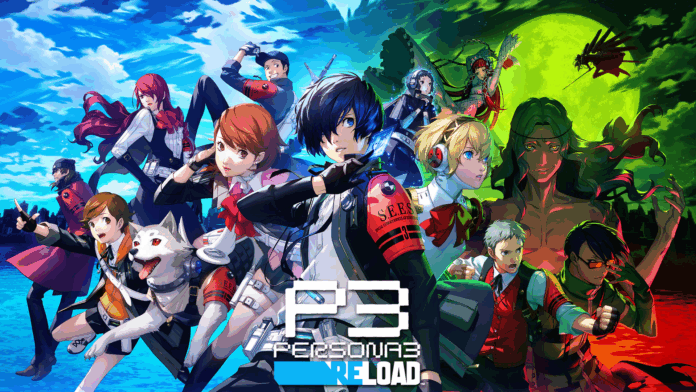
Fast forward to Persona 3 Reload. Armed with slightly more knowledge about the series’ mechanics, I knew I hadn’t experienced everything Persona 5 had to offer. I wanted to do better this time. I had no idea what this really meant.
This is where The Guide came in: a completionist’s dream and nightmare rolled into one perfectly optimized package. I found a comprehensive walkthrough that broke down the exact schedule I needed in order to experience most of the game’s content. As someone who usually chases achievements in games I enjoy, this seemed perfect. But that dream quickly became a suffocating reality.
Following the guide eliminated all guesswork, but it also eliminated all the fun. Playing Persona 3 felt like checking items off a to-do list rather than living through a compelling story. It became a job. Discovering new social links felt overwhelming instead of exciting. I couldn’t just hang out with characters I genuinely enjoyed because I knew it wouldn’t be “efficient.”
Content Abundance vs Player Agency
This experience raised fascinating questions to me about game design, particularly in JRPGs with massive amounts of optional content. Is Persona’s wealth of activities meant to offer variety so players can choose what personally interests them? That seems obvious enough, but what about players who want both organic fun and exploration and to experience everything the game has to offer?
Should players who want to see everything be expected to play these 80+ hour games multiple times? Not everyone has hundreds of hours to dedicate to one game and the alternative (like following guides) can transform these deep, character-driven experiences into mechanical efficiency.
The dilemma here isn’t inherently the game’s fault, I know it’s my completionist brain demanding I play in the statistically “best” way possible. But it highlights a broader design challenge:
How do you create games that satisfy both casual explorers and completionists without forcing either group to compromise their preferred play style?
Forgiveness vs. Challenge
Perhaps the solution lies in more forgiving time management systems that allow for both exploration and completion without requiring exact time precision. But then again, maybe that strict scheduling is part of what makes the Persona games feel realistic and challenging.
There’s no easy answer here. Game developers can’t design around every player’s (mostly my) psychological quirks, but completionist tendencies aren’t also inherently wrong. But my journey through these two Persona games has reminded me that sometimes, the “best” way to play isn’t always the most fun way. Sometimes, the pursuit of seeing “everything” can prevent us from truly experiencing anything.